
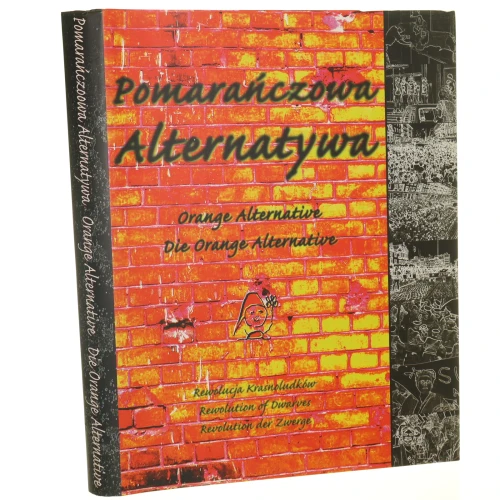
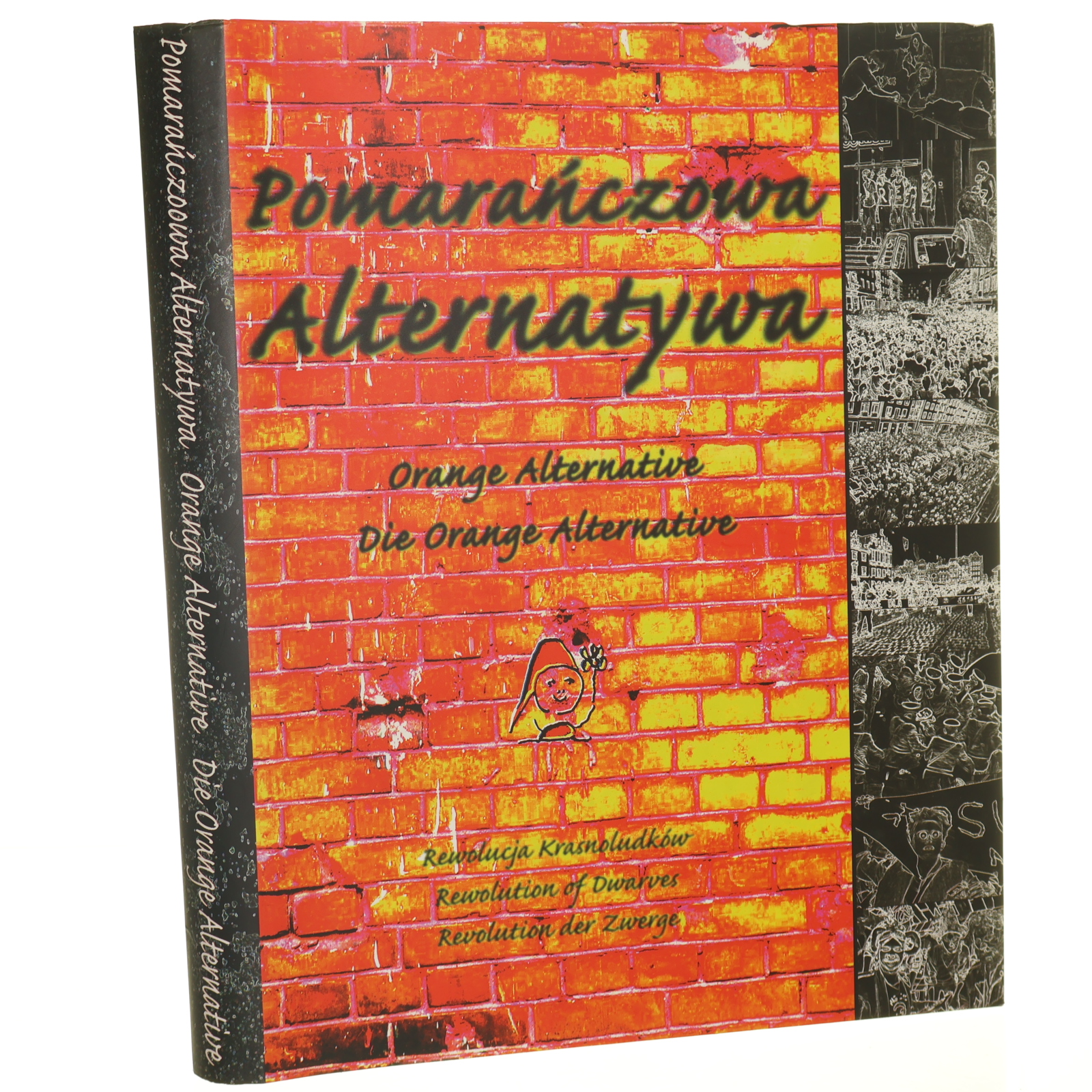
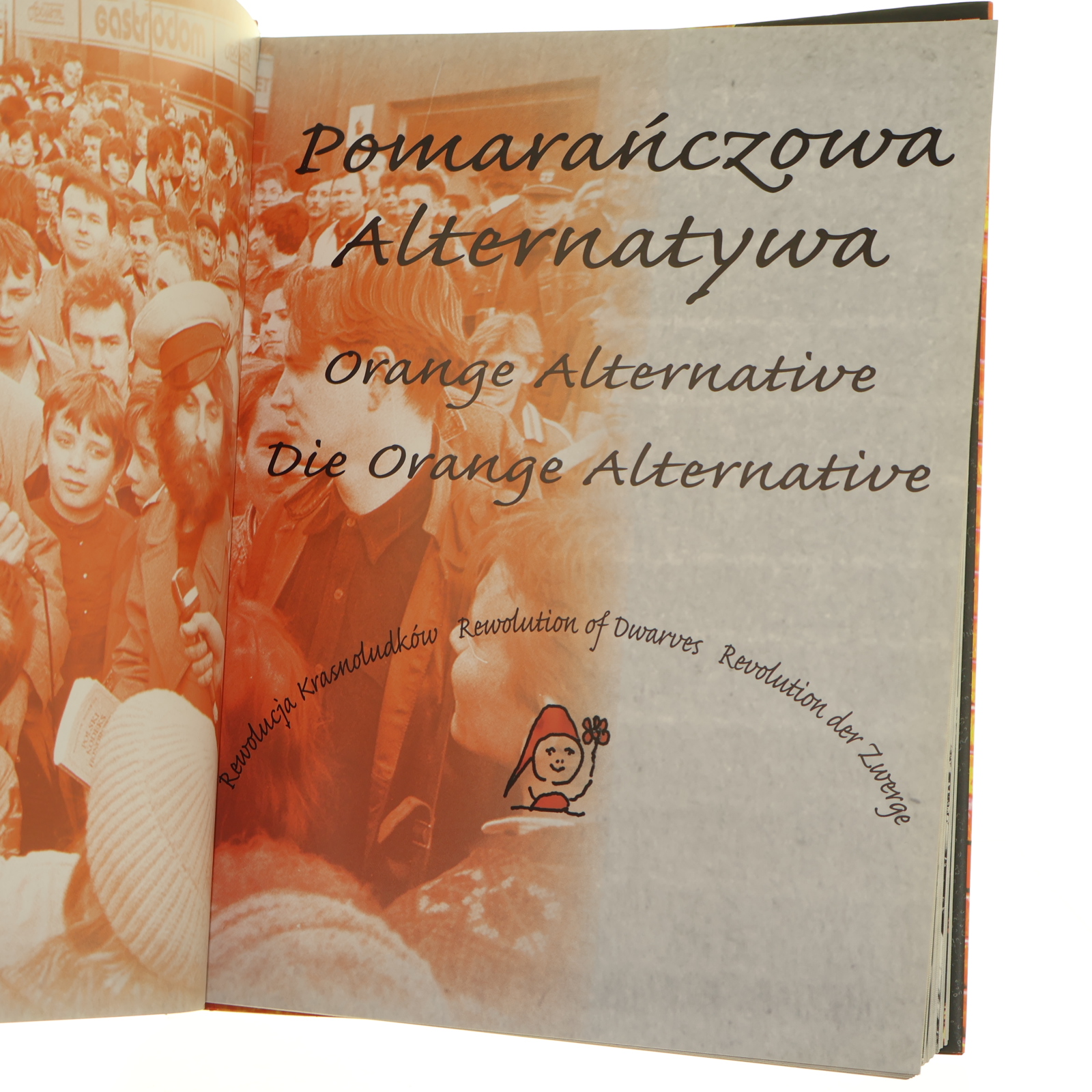
Pomarańczowa Alternatywa rewolucja Krasnoludków [tekst Waldemar Fydrych, Bronisław Misztal tł. Agnieszka Couderq & John Targowski (jęz. ang.), Tina Wünschmann (jęz. niem.) oprac. graf. Agnieszka Couderq] [2008]
 Opis
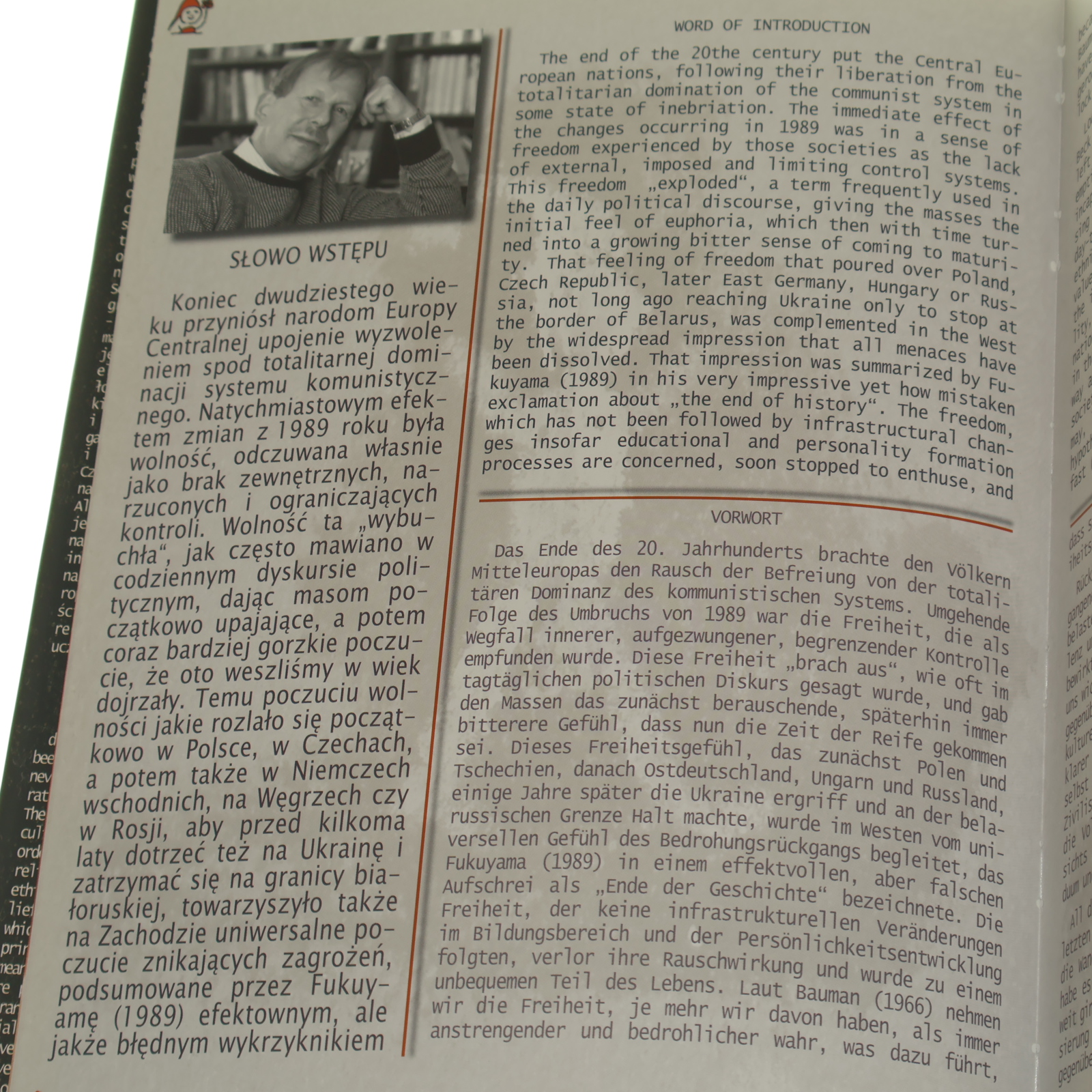
SŁOWO WSTĘPU
Koniec dwudziestego wieku przyniósł narodom Europy Centralnej upojenie wyzwoleniem spod totalitarnej dominacji systemu komunistycznego. Natychmiastowym efektem zmian z 1989 roku była wolność, odczuwana właśnie jako brak zewnętrznych, narzuconych i ograniczających kontroli. Wolność ta „wybuchła”, jak często mawiano w codziennym dyskursie politycznym, dając masom początkowo upajające, a potem coraz bardziej gorzkie poczucie, że oto weszliśmy w wiek dojrzały. Temu poczuciu wolności jakie rozlało się początkowo w Polsce, w Czechach, a potem także w Niemczech wschodnich, na Węgrzech czy w Rosji, aby przed kilkoma laty dotrzeć też na Ukrainę i zatrzymać się na granicy białoruskiej, towarzyszyło także na Zachodzie uniwersalne poczucie znikających zagrożeń, podsumowane przez Fukuyamę (1989) efektownym, ale jakże błędnym wykrzyknikiem
WORD OF INTRODUCTION
The end of the 20th century put the Central European nations, following their liberation from the totalitarian domination of the communist system in some state of inebriation. The immediate effect of the changes occurring in 1989 was in a sense of freedom experienced by those societies as the lack of external, imposed and limiting control systems. This freedom „exploded“, a term frequently used in the daily political discourse, giving the masses the initial feel of euphoria, which then with time turned into a growing bitter sense of coming to maturity. That feeling of freedom that poured over Poland, Czech Republic, later East Germany, Hungary or Russia, not long ago reaching Ukraine only to stop at the border of Belarus, was complemented in the West by the widespread impression that all menaces have been dissolved. That impression was summarized by Fukuyama (1989) in his very impressive yet how mistaken exclamation about „the end of history“. The freedom, which has not been followed by infrastructural changes insofar educational and personality formation processes are concerned, soon stopped to enthuse, and
VORWORT
Das Ende des 20. Jahrhunderts brachte den Völkern Mitteleuropas den Rausch der Befreiung von der totalitären Dominanz des kommunistischen Systems. Umgehende Folge des Umbruchs von 1989 war die Freiheit, die als Wegfall innerer, aufgezwungener, begrenzender Kontrolle empfunden wurde. Diese Freiheit „brach aus“, wie oft im tagtäglichen politischen Diskurs gesagt wurde, und gab den Massen das zunächst berauschende, späterhin immer bitterere Gefühl, dass nun die Zeit der Reife gekommen sei. Dieses Freiheitsgefühl, das zunächst Polen und Tschechien, danach Ostdeutschland, Ungarn und Russland, einige Jahre später die Ukraine ergriff und an der belarussischen Grenze Halt machte, wurde im Westen vom universellen Gefühl des Bedrohungsrückgangs begleitet, das Fukuyama (1989) in einem effektvollen, aber falschen Aufschrei als „Ende der Geschichte“ bezeichnete. Die Freiheit, der keine infrastrukturellen Veränderungen im Bildungsbereich und der Persönlichkeitsentwicklung folgten, verlor ihre Rauschwirkung und wurde zu einem unbequemen Teil des Lebens. Laut Bauman (1966) nehmen wir die Freiheit, je mehr wir davon haben, als immer anstrengender und bedrohlicher wahr, was dazu führt,
[fragment]
Szczegóły
| autor | Fydrych Waldemar |
| tytuł | Pomarańczowa Alternatywa rewolucja Krasnoludków |
| redakcja | [tekst Waldemar Fydrych, Bronisław Misztal tł. Agnieszka Couderq & John Targowski (jęz. ang.), Tina Wünschmann (jęz. niem.)] |
| ilustrator / projekt okładki | [oprac. graf. Agnieszka Couderq] |
| seria wydawnicza | brak informacji |
| miejsce wydania | Warszawa |
| rok wydania | 2008 |
| wydawnictwo | Wydawnictwo Pomarańczowa Alternatywa |
| liczba stron | 309, [1] |
| rodzaj oprawy | tekturowa z obwolutą |
| format | 32 cm |
| dodatkowe informacje | Ilustracje. |
| dodatkowe informacje [c. d.] | Tekst w jęz.: pol., ang., niem. |
| stan | bdb |